




In the dynamic world of NYC real estate, 2025 brought a balanced resurgence for buyers and sellers: inventory levels increased, sales volumes surged, and asking prices remained stable, with properties closing near their listed values. On the rental side, however, competition intensified due to dropping vacancy rates and steady demand—a pattern solidified by return-to-office mandates since 2022. This strain stems from New York City's longstanding housing shortage, fueled by decades of insufficient new construction.
Looking ahead to the 2026 NYC housing market , expect an even quicker pace in sales, opening doors for both buyers and sellers. Renters may face steeper rent hikes amid economic uncertainties and high homeownership barriers, while a wave of fresh developments will redefine rental options. Affordability pressures across sales and rentals will demand smarter strategies from New Yorkers. Here are five key 2026 NYC housing market predictions to help you prepare.

1. Expect Faster NYC Home Sales in 2026—Great News for Buyers and Sellers Alike
The NYC housing market in 2026 is poised for acceleration, with homes selling quicker and achieving the highest sales volume since 2022. In 2025, declining mortgage rates fueled record activity: the median days on market dropped to 68 from 72 in 2024. Zillow forecasts rates will ease further but hover above 6%, keeping buyer momentum strong and pushing median days on market even lower.
Unlike the frenzied bidding wars of 2021-2022, this speedup won't overwhelm buyers. New listings hit 35,048 from January to October 2025—the most since 2022—boosting inventory by 1.6% year-over-year, the first gain since pre-pandemic levels. As rates stabilize, sellers will remain motivated, ensuring ample opportunities in the 2026 NYC real estate market . For buyers, this means less stress and more choices; for sellers, quicker closes and competitive offers.
Key Takeaway for 2026 NYC Housing Market Navigation: Monitor mortgage trends closely. With sustained demand, prime properties in neighborhoods like Brooklyn and Manhattan could move in under 60 days—position yourself early for the best deals.
2. Co-Buying Trends Will Surge: The Rise of Multigenerational and Friend-Based NYC Homeownership
Co-buying is emerging as a smart workaround for NYC's high costs, and 2026 NYC housing market predictions point to its growing dominance. StreetEasy's 2025 Buyer Trends Survey revealed 56% of prospective buyers plan to co-purchase: 43% with a spouse or partner, 9% with friends, and 6% with family. This "third way"—sharing costs on multifamily homes like duplexes or townhouses with garden apartments—offers financial relief and a communal vibe without full cohabitation.
Demographics amplify this shift. NYC's aging population mirrors national trends, with baby boomers (22% of buyers over 59) eyeing downsized, multigenerational setups. Millennials dominate buyer interest, but older cohorts seek city stays with family support. Yet, supply lags: multifamily inventory rose just 0.6% to 5,625 units in 2025, with median asking prices climbing 5.2% to $1.5 million.
To fuel the 2026 NYC real estate trends , modest reforms are essential—like zoning for two- or three-family homes near transit or expanding accessory dwelling units (ADUs) with incentives. These changes could unlock flexible options in underserved areas, making co-buying a cornerstone of affordable homeownership.
Pro Tip: If co-buying appeals, explore legal agreements early. In 2026, demand for multifamily properties could push prices up 5-7%—act now to lock in equity shares.

3. NYC Rent Growth Accelerates in 2026 Amid Tight Supply and Economic Caution
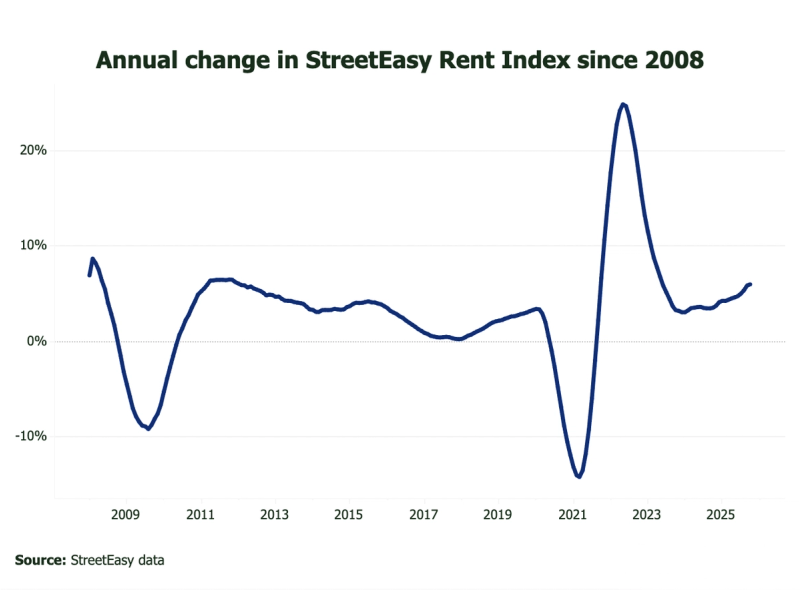
While national rents may cool, NYC rental market predictions for 2026 forecast quicker increases. Through October 2025, the StreetEasy Rent Index showed 4.8% year-over-year growth, with vacancies tightening further. NYC's rental undersupply—dating back to the 1990s—persists despite post-pandemic builds, creating a persistent gap.
Renters are staying put due to sluggish private-sector job growth and lingering high mortgage rates, heightening competition in hot spots like Williamsburg or the Upper East Side. If a recession hits (though unlikely), demand could falter—renters' median income ($64,866 in 2024) is 46.6% below homeowners', per U.S. Census data, leaving them vulnerable.
Policy plays a role: expanding rental vouchers could buffer shocks. For now, expect 2026 NYC rent increases of 5-7% citywide, outpacing national averages.
Actionable Advice for Renters: Budget for hikes and scout concessions. In a cooling labor market, lease renewals offer stability— but eye new builds for potential savings.
4. New Developments Emerge as the Affordable Choice in 2026 NYC Rentals
In the 2026 NYC housing market , new constructions will shine as "affordable" havens, narrowing the rent premium over older stock. By October 2025, over 30% of rentals were in post-2010 buildings, curbing growth: new units rose 20% since 2019 (with concessions), versus 23.1% for pre-war apartments.
This shift stems from vacancies in legacy buildings and construction booms in outer boroughs. Pre-war spots in transit hubs like Manhattan face 6-8% hikes due to RTO demand and zoning barriers. Meanwhile, new developments in Queens or Brooklyn offer perks like free months' rent, easing entry.
Supply-side wins, like the 2024 City of Yes reforms ($5B investment, deeper affordability mandates) and state incentives (485-x, 467-m), will amplify this. NYC real estate trends 2026 hinge on such expansions to tame costs.
Insight: Prioritize new builds for value—concessions could save 10-15% upfront, making them ideal for long-term renters.
5. Communal Amenities Will Define 2026 NYC Rental Living: A Shift Toward Community
As homeownership slips away, NYC renters are aging—median age hit 47 in 2023, up from 45 in 2013—and craving permanence. 2026 NYC rental trends will spotlight communal spaces in new developments, fostering belonging amid longer tenancies.
In Brooklyn and Queens, where new builds proliferate, amenities are evolving: 61% of post-2022 large rentals (50+ units) feature lounges (up from 56%), 63% rooftop decks (vs. 47% in older), 20% game rooms (from 14%), 19% coworking spaces (doubled from 11%), and 29% wellness spas (from 9%). Even basketball courts rose to 7%.
This lifestyle pivot helps retention and stands out in a crowded market. For property managers, it's a differentiator; for renters, it's home-like without ownership hassles.
Future-Proof Your Search: In 2026, filter for ammenty rich buildings— they boost satisfaction and could stabilize rents through loyalty.
Navigating the 2026 NYC Housing Market with Confidence
The 2026 NYC housing market predictions paint a vibrant yet challenging picture: brisk sales with balanced inventory, innovative co-buying solutions, brisk rent growth tempered by new supply, and amenity-rich rentals redefining urban life. Affordability remains the wildcard—policy reforms and economic steadiness will be key.
Whether you're buying your first multifamily co-op, renewing a lease in a wellness-equipped high-rise, or listing a townhouse, stay informed on NYC real estate trends 2026. StreetEasy's tools—like our Rent Index and Buyer Trends Survey—empower your decisions.
Ready to dive in? Explore our buyer and renter guides updated for the realities of the 2026 market.
The Ultimate NYC Buyer's Guide - 2026 Edition
The Ultimate NYC Renter's Guide - 2026 Edition
**This post is based on analysis as of December 2025. Market conditions can shift; reach out to Michael for the most current market conditions and personalized advice.

About the Author
Michael Comandini is a New York City real estate broker with Keller Williams NYC. Combining 15 years of expertise with a design-obsessed drive, he assesses spaces beyond the data — measuring their capacity to elevate everyday life. He resides on the Lower East Side with his French bulldog, Churro.
CONNECT WITH MICHAEL
(917) 902-6419 | mc@comandinire.com