




Flatiron District NYC — Complete Guide to Living & Buying
By Michael Comandini | The Aesthetic Broker | mc@comandinire.com
Updated: March 2026
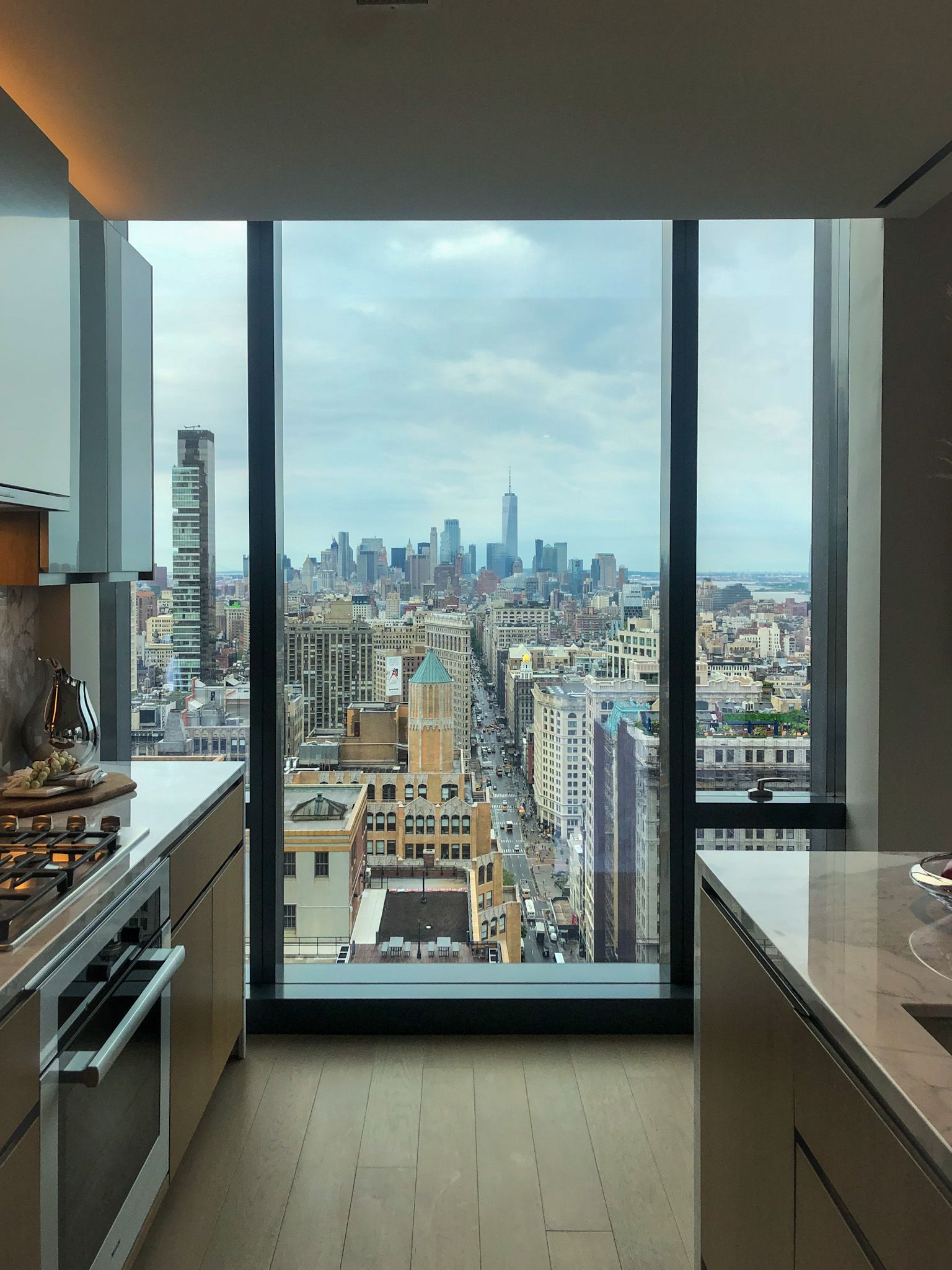
Overview & Vibe
The Flatiron District is one of those Manhattan neighborhoods that doesn't need to try hard — it just is Anchored by the iconic Flatiron Building at the intersection of Broadway, Fifth Avenue, and 23rd Street, this neighborhood sits at the crossroads of everything. Literally. You've got Midtown energy to the north, the creative pulse of the Village to the south, Chelsea's gallery scene to the west Chelsea , and the quiet dignity of Gramercy Park to the east. Living in Flatiron NYC means you never have to commit to just one version of Manhattan — you get all of them.
Roughly bounded by 14th Street to the south and 26th Street to the north, between Park Avenue South and Sixth Avenue, the Flatiron District packs an absurd amount of history and culture into a compact footprint. This is the birthplace of Silicon Alley — the stretch of Broadway where New York's tech scene was born in the late '90s. It's the home of the Ladies' Mile Historic District, where 19th-century cast-iron facades once housed the city's most fashionable department stores. And it's the neighborhood where Madison Square Park quietly became one of Manhattan's most beloved public spaces.

Design-forward, well-curated, energetic but not chaotic.
You'll see creatives, tech workers, and finance professionals sharing sidewalk space with tourists snapping the Flatiron Building. The restaurants are world-class. The architecture ranges from soaring pre-war lofts to sleek new-construction condos. And the location — dead center Manhattan — is genuinely unbeatable for anyone who wants to be close to everything without living in the thick of Midtown.
I tell my clients: if you want a central neighborhood that feels both established and alive, that rewards walking and rewards taste, Flatiron is it.
Real Estate Market
The Current Landscape (2026)
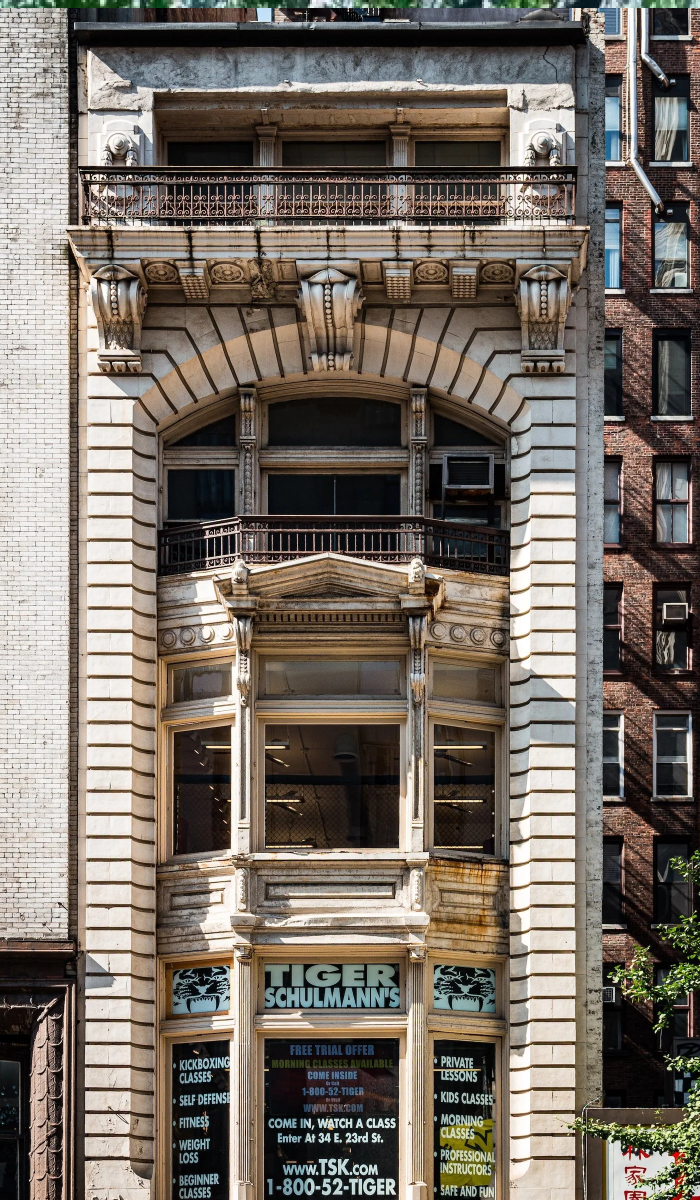
The Flatiron real estate market is one of the most dynamic in Manhattan, and it rewards buyers who understand the nuances. As of early 2026, median sale prices for condos in the Flatiron District sit in the range of $1.4M–$1.8M, with price per square foot averaging $1,500–$1,900 depending on building age, finishes, and views. Co-ops trade at a discount — typically $900–$1,300 per square foot — but come with stricter board approval processes and subletting restrictions. One Bedrooms in the area start around $750K – $950K for co-ops and $1.0m –$1.4M for condos. Two-bedrooms in newer condo buildings regularly clear $2M – $3.5M, and trophy units with park views or penthouse-level finishes push well beyond $4M. Rentals remain competitive: expect $3,800–$5,200/month for a One Bedroom and $5,500–$8,500 for a Two Bedroom in a full-service building.
Co-op vs. Condo
Flatiron offers a genuine mix. The co-ops tend to be in older, pre-war buildings — think high ceilings, hardwood floors, and the occasional original fireplace mantel. The trade-off is board approval, financial scrutiny, and typically more restrictive rules around investors and pied-à-terre buyers. Condos dominate the newer construction and converted loft buildings, and they're the better play for buyers who want flexibility, foreign purchasers, or anyone looking to use the unit as an investment.
Thinking about calling the Flatiron home?
I'd love to walk you through the neighborhood.
[Let's talk →]
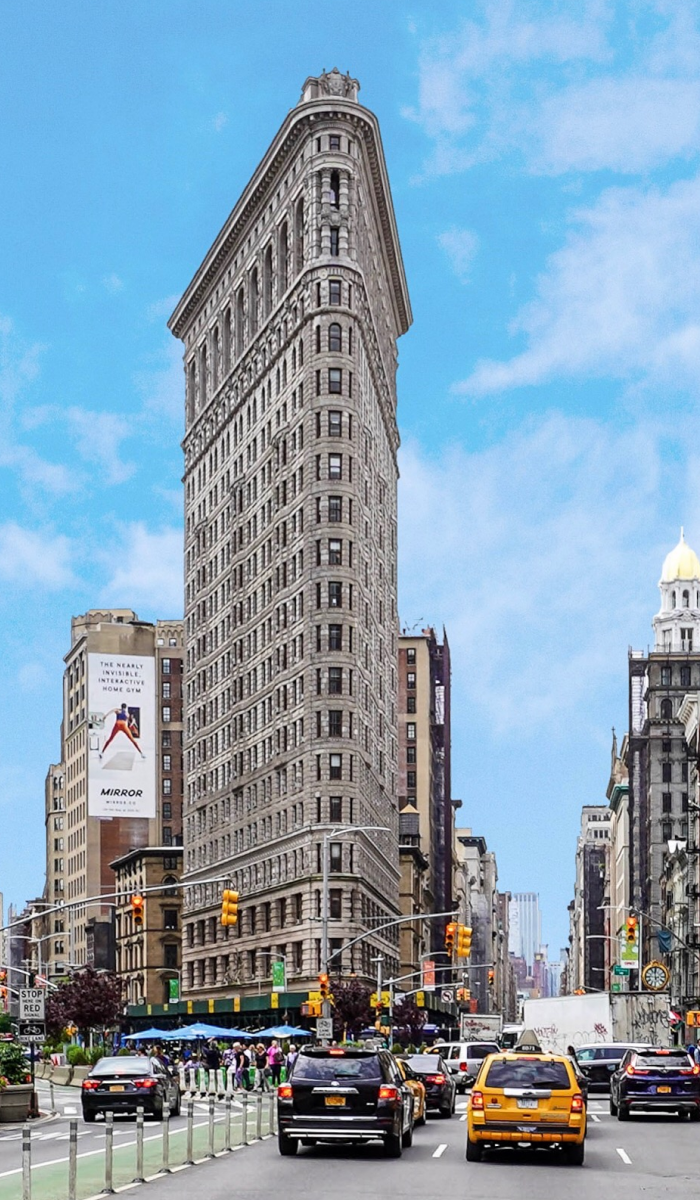
My Favorite Flatiron Streets
Every neighborhood has its showstoppers, but Flatiron's best streets reward the slow walker — the kind of person who actually looks up at the buildings.
Broadway (between 20th and 25th Streets) — This is the spine of Flatiron. The mix of old and new architecture is staggering. You've got remnants of the Ladies' Mile department stores alongside modern retail and residential conversions. The energy is always on.
East 23rd Street — The Flatiron Building sits at its western end, and the street runs east through a fascinating transition from commercial bustle to the residential quiet approaching Gramercy. Walk it at golden hour. Trust me.
Fifth Avenue below 23rd — This stretch has a European quality to it. Less traffic than you'd expect, beautiful building stock, and proximity to both Madison Square Park and Union Square. It's one of those corridors where you can feel the neighborhood's history in every facade.
West 20th Street (between Fifth and Sixth Avenues) — Quieter, more residential, lined with handsome brownstones and pre-war apartment buildings. This is where Flatiron starts to bleed into Chelsea [Link: Chelsea Guide], and the crossover works beautifully.
Park Avenue South — Underrated. The restaurant scene here is strong, the buildings are well-maintained, and you're a stone's throw from Gramercy Park — the only private park in Manhattan, which adds a layer of exclusivity to the surrounding blocks.